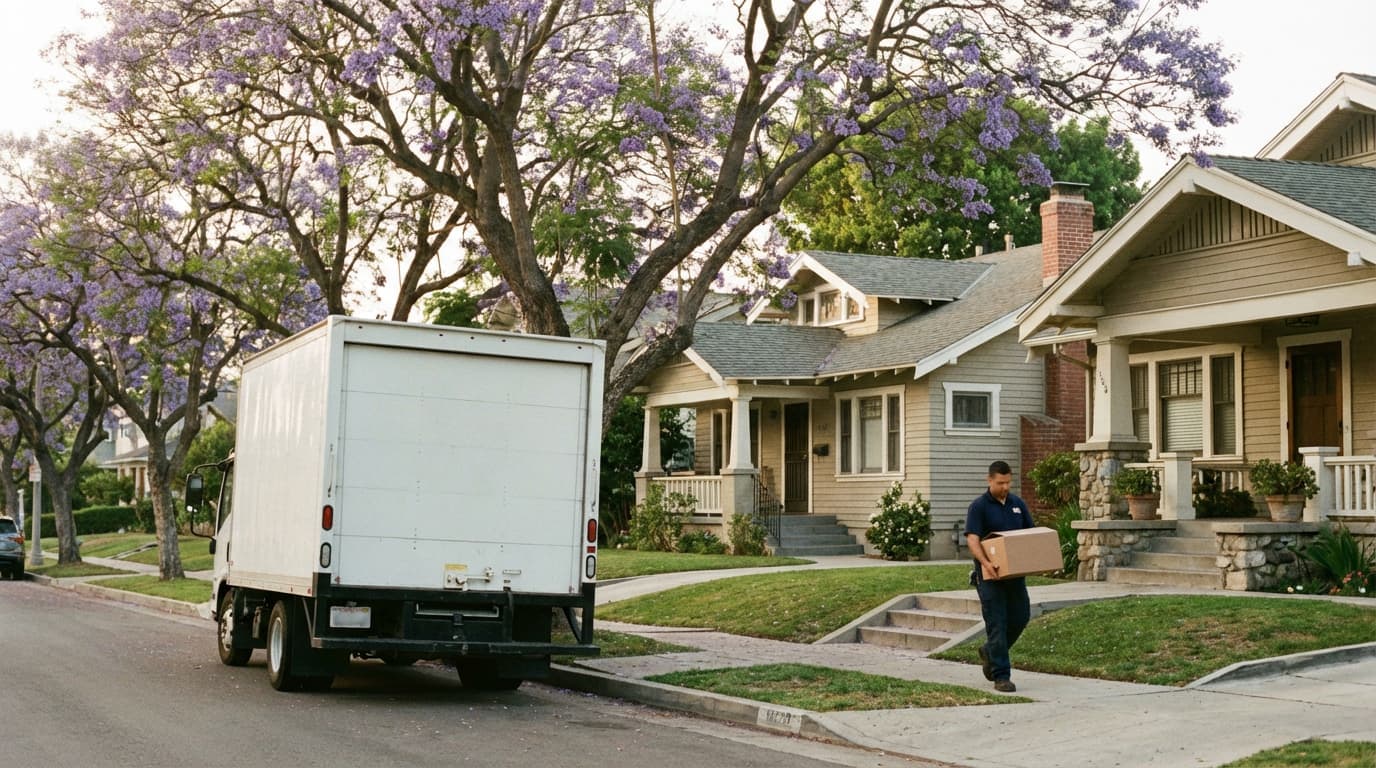

If you're planning a move in Los Angeles, a generic moving checklist won't cut it. LA has its own rules — parking permits from LADOT, building access windows that vary by neighborhood, freeway timing that can turn a 30-minute drive into two hours, and lease cycles that affect when you can even get a moving crew. This ultimate moving checklist for Los Angeles covers every step, week by week, with the LA-specific details that most lists leave out.
I've helped over 200 families move across this city, and the biggest problems I see aren't about forgetting to pack — they're about forgetting the logistics that are unique to LA. This checklist fixes that. And if you want to get a head start right now, here's how AI Moving works — scan your space, get an accurate AI estimate, and let vetted movers compete for your business.
8 Weeks Before Your Move
Start early. Eight weeks feels like a lot, but in LA, lead time is everything — especially if you're moving during summer or at the end of a month.
Set your moving date. Mid-week moves (Tuesday through Thursday) are cheaper and less chaotic than weekends. Mid-month is better than end-of-month when lease turnover creates a rush. If you have flexibility, use it here — it's the single biggest money-saving decision.
Research and book movers. Get at least three quotes from licensed movers. Every California mover needs a CAL-T number from the CPUC — ask for it and verify online. For local moving services, two to three weeks of lead time is fine in off-peak months, but in summer you'll want four weeks. For a long-distance move, start even earlier.
Create a moving budget. Factor in movers, packing supplies, parking permits ($44 per sign in LA), possible storage, utility setup fees, and tips for the crew. Having a number upfront prevents sticker shock later.
Start decluttering. Go room by room. Anything you haven't used in a year — sell, donate, or trash. Every item you don't move saves time and money. LA has excellent donation pickup options through organizations like the Salvation Army and Habitat for Humanity ReStore.
Take photos of your electronics setup (TV cables, router connections, desktop wiring) before you unplug anything. On moving day you'll be too busy to remember what went where, and these photos save hours of frustration at the new place.
6 Weeks Before Your Move
Notify your landlord. Most LA leases require 30 days written notice. Check your lease for the exact requirement — some buildings need 60 days. Send the notice in writing (email is fine for most, but certified mail is safer for formal leases).
Check your new building's moving rules. This is LA-specific and critical. Call your new building management and ask: What hours are moves allowed? Is there a freight elevator, and does it need to be reserved? Do movers need to provide a Certificate of Insurance (COI)? Is there a move-in fee or deposit? Buildings in West Hollywood, DTLA, and Century City often restrict moves to weekday business hours only.
Check your current building's move-out rules. Same questions. Some buildings require you to schedule your move-out, reserve the elevator, and complete a move-out inspection. Find out now, not on moving day.
Start collecting packing supplies. Boxes (medium and small for heavy items, large for light items like bedding), packing paper, bubble wrap for fragile items, tape, and markers. Buy 20% more paper than you think you need.
4 Weeks Before Your Move
Confirm your movers. Call to reconfirm the date, time, crew size, and any special requirements (piano, artwork, heavy safes). Get the confirmation in writing.
Apply for LADOT parking permits. If your current or new home is in a permit-parking zone or on a street where a moving truck needs reserved curb space, you need temporary no-parking signs from LADOT. Apply at least 5–7 business days before your move. Cost: $44 per sign, typically need 2–4 signs. Neighborhoods where this is almost always necessary: Beverly Hills, Santa Monica, Hollywood, Silver Lake, Echo Park.
Forward your mail. Set up USPS mail forwarding at usps.com. It takes 7–10 business days to activate, so don't leave this for the last minute.
Notify important contacts. Update your address with: employer, bank, insurance (auto, health, renters/homeowners), subscriptions, doctors, dentist, vet, voter registration (California requires re-registration when you move), and the DMV (you have 10 days after moving to update your California driver's license).
➤ Get Your Free AI Estimate → Scan your space and compare mover quotes https://aimoving.app/how-it-works
2 Weeks Before Your Move
Start packing non-essentials. Out-of-season clothing, books, decorations, guest room items, rarely used kitchen tools. Label every box on two sides and the top: room name + contents summary. Color-coding by room speeds up unloading significantly.
Handle utilities. Schedule disconnection of electricity, gas, water, and internet at your current address for the day after you move out (gives you buffer). Schedule connection at your new address for the day before you move in. In LA, DWP (Department of Water and Power) handles electricity and water — start and stop service at ladwp.com. Gas is SoCalGas. Internet providers vary by neighborhood.
Arrange parking at both locations. Confirm with both buildings where the moving truck will park. If it's a street with meters, you'll need those LADOT signs. If it's a building with a loading dock, confirm your reservation time. For areas like Glendale with wider residential streets, parking is usually straightforward — but verify anyway.
Plan your route. Talk to your mover about which route they'll take. If your move involves freeways, the time of day matters enormously. A move that starts loading at 8 AM and hits the 405 at 11 AM is in good shape. A move that loads until noon and hits the 10 at 2 PM is in trouble.
📍 LA Heads Up: If your move crosses the city (Westside to Valley, South Bay to Pasadena), freeway timing isn't optional — it's the difference between a 4-hour move and a 7-hour move. Discuss the route and timing with your movers when you confirm.
1 Week Before Your Move
Pack your essentials box. This is the box you keep with you (not on the truck): phone chargers, medications, toiletries, a change of clothes, basic cleaning supplies, important documents (lease, ID, insurance), snacks, and water bottles. You'll want this accessible the moment you arrive at your new place.
Deep clean as you pack. Clean each room as it empties. It's easier now than going back after everything is out. Most LA leases require the apartment to be returned in "broom-clean" condition for your deposit back.
Confirm everything one more time. Call your movers. Confirm the date, arrival time, and your phone number. Confirm elevator reservations at both buildings. Confirm your LADOT signs are posted (they go up 24 hours before the move). Confirm utilities are scheduled.
Disassemble what you can. Bed frames, desks, shelving units — anything that breaks down should be broken down before the crew arrives. Bag the hardware and tape it to the furniture. This saves the crew time, which saves you money on an hourly bill.
💰 Cost Note: Every hour you save through preparation is $130–$160 off your bill (the cost of a two-person crew in LA). Spending an evening disassembling furniture and clearing pathways can easily save you $200–$300 on moving day.
Moving Day
Before the crew arrives: Walk through every room. Open every closet, every drawer, every cabinet. Check the balcony, the storage unit, the garage. Confirm nothing is left behind. Clear a path from each room to the front door.
When the crew arrives: Walk them through the home. Point out fragile items, heavy items, and anything that needs special handling. Show them the most efficient path to the truck. If there are items you're not moving, mark them clearly.
Stay accessible. Don't disappear during the move. The crew will have questions — where does this go at the new place, should this be wrapped differently, is this item going on the truck or staying. Keep your phone charged and stay in communication range.
At the new place: Direct traffic. Tell movers which room each box goes to as they carry it in. This takes five seconds per box and prevents hours of reshuffling later. Check off items against your inventory as they come off the truck.
🤖 How AI Moving Helps: When you use AI Moving's video scan before your move, you get a detailed inventory that both you and your movers reference on moving day. It's your checklist for making sure everything that left your old place arrives at your new one.
➤ See AI Moving Pricing → Transparent rates, no hidden fees https://aimoving.app/pricing

First Week in Your New Home
Unpack essentials first. Kitchen, bathroom, bedroom — in that order. You need to eat, shower, and sleep before you need your bookshelf organized. Everything else can wait.
Test everything. Run every faucet, flush every toilet, test every light switch, check every outlet. If something doesn't work, document it with photos and notify your landlord immediately — you want this on record before your move-in inspection.
Update your address (the ones you missed). Amazon, food delivery apps, rideshare apps, gym membership, loyalty programs, magazine subscriptions. You'll be updating addresses for weeks — keep a running list.
Meet your neighbors. LA can feel isolating if you don't make the first move. A simple introduction goes a long way, especially in apartment buildings where you'll be sharing walls, elevators, and parking.
Explore your neighborhood. Find your nearest grocery store, pharmacy, coffee shop, and laundromat. Locate the closest urgent care and hospital. Figure out your parking situation (street cleaning days, permit zones, guest parking). Get oriented before the routine sets in.
Frequently Asked Questions
Q: How far in advance should I start planning a move in LA?
A: Eight weeks is ideal. If you're moving during peak season (June–August) or at the end of a month, start even earlier — especially for booking movers. In off-peak months, six weeks is workable.
Q: Do I need parking permits for a moving truck in Los Angeles?
A: In many neighborhoods, yes. LADOT issues temporary no-parking signs for $44 each. You typically need 2–4 signs to clear enough curb space for a truck. Apply at least 5–7 business days before your move. Permit-heavy areas include Beverly Hills, Santa Monica, Hollywood, Silver Lake, and West Hollywood.
Q: What should I pack last and unpack first?
A: Pack last: kitchen essentials, bathroom items, phone chargers, medications, one set of sheets and towels, and cleaning supplies. Unpack first: the same items. Keep them in a clearly labeled essentials box that stays with you, not on the truck.
Q: How do I handle utilities when moving within LA?
A: Schedule disconnection at your old address for the day after move-out and connection at your new address for the day before move-in. DWP handles electricity and water (ladwp.com), SoCalGas handles gas, and internet varies by provider and neighborhood.
Q: What's the most common mistake people make when moving in LA?
A: Not checking building access rules. Every building has different hours, elevator policies, and insurance requirements for movers. Finding out on moving day that your building only allows moves between 9 AM and 3 PM on weekdays — when you booked a Saturday — is a costly surprise. Always check with both buildings at least four weeks ahead.
Your Move, Simplified
A good checklist doesn't just remind you what to do — it tells you when to do it and what's specific to your city. LA has its own moving rhythm, and respecting it makes everything smoother.
Ready to take the next step? Scan your space with AI Moving, get an accurate estimate in minutes, and let vetted movers compete for your move. Check our pricing or get started with a free AI estimate.
➤ Scan Your Space → Get a Free AI Estimate from Vetted LA Movers https://aimoving.app/how-it-works