Moving a piano in Los Angeles is not a DIY job. I’ve coordinated piano moves across LA for four years, and the pattern is consistent: people underestimate the weight, the awkwardness, and the damage risk. An upright piano weighs 300–500 pounds. A baby grand weighs 500–700 pounds. A full concert grand can exceed 1,200 pounds. These instruments are heavy, fragile, and shaped in a way that makes them dangerous to move without specialized equipment and training.
This guide covers what it actually costs to move a piano in Los Angeles, how professionals do it, and what to look for when hiring a piano mover. Whether you’re moving an upright across town or a grand piano to a new home in Beverly Hills, the information here will help you protect your instrument and your budget.
How Much Does It Cost to Move a Piano in LA?
Piano moving costs in Los Angeles depend on the type of piano, the distance, and the access complexity at both locations. Here are real 2026 price ranges:
Upright piano (local move, ground floor to ground floor): $200–$400. This is the simplest scenario — two to three movers with a piano dolly, 1–2 hours of work.
Upright piano with stairs: $350–$600. Each flight of stairs adds $50–$100. A third-floor walkup in Silver Lake is a very different job than a ground-floor apartment in Burbank.
Baby grand piano (local move): $400–$800. Baby grands require disassembly (removing the legs and pedal lyre), wrapping, and careful transport on a specialized piano board. More labor, more time, more risk.
Grand piano (local move): $600–$1,200+. Full-size grands are the most complex piano moves. Some require crane lifts through windows if they can’t navigate stairs or doorways.
Long-distance piano move (out of LA): $1,000–$3,000+ depending on distance and piano type. Climate-controlled transport is recommended for high-value instruments.
These prices are for piano-only moves. If you’re moving your entire household and adding a piano, most moving companies charge a $150–$400 surcharge on top of the regular move price. Always disclose the piano when getting quotes — surprise pianos on moving day lead to delays, price disputes, and sometimes refusal to move the item.
Why You Need a Specialist (Not Just Any Mover)
Regular movers and piano movers are different specialties. A standard moving crew handles furniture, boxes, and appliances. A piano mover has specific equipment and training for instruments that weigh hundreds of pounds and can be damaged by temperature changes, humidity, vibration, and even slight drops.
Specialized equipment matters: Piano movers use piano boards (padded skids), heavy-duty straps rated for 1,000+ pounds, custom padding, and specialized dollies with locking wheels. A standard furniture dolly can’t safely support a grand piano.
Training matters: Piano movers know how to disassemble a grand (remove legs, pedal lyre, music desk) without damaging the finish or the action mechanism. They know the balance points. They know how to navigate tight corners, narrow doorways, and staircases without tipping.
Insurance matters: A piano can be worth $2,000 to $200,000+. Standard moving company liability covers $0.60 per pound — that’s $300 for a 500-pound piano, regardless of its actual value. A piano mover should carry full-value coverage or offer it as an option. Ask for proof of insurance before booking.
Never let someone move your piano with a regular furniture dolly, a pickup truck, or “a few strong guys.” I’ve seen the aftermath: cracked soundboards, broken legs, scratched floors, herniated discs, and a $15,000 Steinway dropped down a flight of stairs. The cost of a professional piano move is insurance against a catastrophe.
The Piano Moving Process: Step by Step
Pre-Move Assessment
A professional piano mover will ask about: the type of piano (upright, baby grand, grand), the floor level at both locations, whether there’s elevator access, the width of doorways and hallways, any tight corners or staircases, and the distance between locations. Some will do a site visit for complex moves (grand pianos, high floors, narrow access).
Preparation and Wrapping
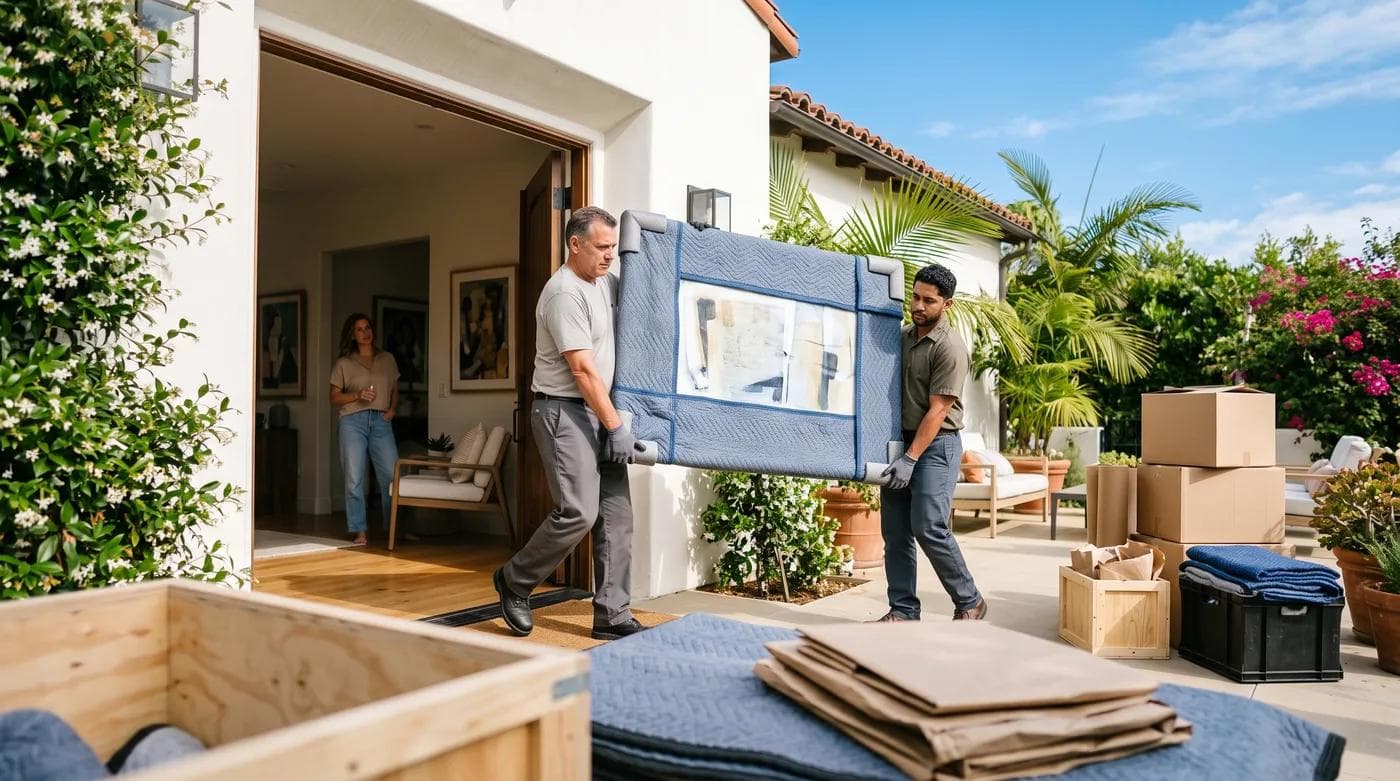
For uprights: The keyboard lid is locked or taped shut. The entire piano is wrapped in heavy moving blankets secured with straps. The piano is tilted onto a specialized piano dolly.
For grands: The lid is closed and locked. The music desk and pedal lyre are removed and wrapped separately. The legs are removed (each leg is wrapped individually). The body is placed on a padded piano board and strapped securely. The entire assembly is wrapped in blankets.
Transport
Pianos are loaded into the truck last and unloaded first — they need to be accessible, not buried behind boxes. In the truck, the piano is strapped to the wall to prevent any movement during transit. For grands on a piano board, the flat side goes against the truck wall.
For long-distance moves, climate-controlled transport protects the piano from temperature and humidity extremes that can crack the soundboard and throw the tuning off permanently.
Delivery and Setup
At the destination, the process reverses. The piano is positioned in its final spot, legs are reattached (for grands), and the instrument is unwrapped and inspected for damage. The mover should give you a chance to inspect before signing off.
Wait 2–4 weeks after your move before tuning your piano. The instrument needs time to acclimate to the temperature and humidity of its new environment. Tuning immediately after a move is wasted money — it will go out of tune again within days as the wood adjusts.
[INSERT IN-ARTICLE IMAGE HERE]
LA-Specific Piano Moving Challenges
Stairs and walkups. Many LA apartment buildings — especially in Hollywood, Los Feliz, and Silver Lake — are older walkups without elevators. Moving an upright up three flights of narrow stairs requires 3–4 movers and significantly more time. For grands in walkups, the cost can double.
Parking and access. Street parking in neighborhoods like West Hollywood, Echo Park, and parts of Santa Monica requires LADOT no-parking signs ($44/sign). Piano movers need the truck as close to the entrance as possible — a long carry with a 500-pound instrument is dangerous and expensive.
High-rise buildings. Buildings in DTLA, Century City, and the Wilshire Corridor require freight elevator reservations, Certificate of Insurance from the mover, and often restrict moving to specific hours. A grand piano may not fit in the freight elevator — check dimensions before booking.
Crane moves. When a grand piano can’t fit through doorways or stairwells, a crane lift through a window or balcony is the only option. This is more common in LA than people think — especially in hillside homes in the Hollywood Hills and Pasadena foothills. Crane moves add $500–$2,000+ depending on height, access, and whether you need a city permit.
If your piano is going to a hillside home in the Hollywood Hills, Pacific Palisades, or Pasadena foothills, tell your mover about the driveway. Steep driveways, hairpin turns, and narrow access roads are common in LA’s hill neighborhoods and can make the difference between a straightforward delivery and a multi-hour logistical challenge.
How to Find a Reliable Piano Mover in LA
Not every mover who says they move pianos actually specializes in it. Here’s how to vet them:
Ask how many pianos they move per month. A real piano mover handles 20–50+ pianos monthly. If they say “a few,” that’s a general mover who occasionally moves pianos — not a specialist.
Ask about equipment. They should have piano boards, heavy-duty ratchet straps, piano dollies (not furniture dollies), and custom padding. If they show up with a furniture blanket and a hand truck, stop the move.
Verify insurance. Ask for a certificate of insurance showing full-value coverage for instruments. Standard mover liability ($0.60/pound) is inadequate for any piano worth more than a few hundred dollars.
Check reviews specifically for piano moves. General moving reviews don’t tell you about piano expertise. Look for reviews that mention pianos, grands, or instrument moves specifically.
Get the quote in writing. A binding written quote protects you from day-of price increases. The quote should itemize: piano type, origin and destination details (floor, stairs, elevator), distance, and any special requirements (crane, storage, tuning hold).
When you use AI Moving, movers see your full inventory including the piano. For white glove moving services that include piano handling, the video scan ensures the mover knows exactly what they’re dealing with before they quote.
Frequently Asked Questions
Q: Can regular movers move a piano?
A: Some full-service movers handle uprights as part of a household move, but grands and high-value instruments should always go with a piano specialist. Regular movers typically lack the equipment and training for safe piano transport. If your mover offers piano moving, ask about their specific equipment and insurance coverage.
Q: How much does it cost to move a grand piano in Los Angeles?
A: A local baby grand move in LA costs $400–$800. A full-size grand costs $600–$1,200+. Stairs, tight access, and crane lifts can push costs higher. Long-distance grand piano moves start at $1,000 and go up with distance and complexity.
Q: Should I tune my piano after moving?
A: Yes, but wait 2–4 weeks. The piano needs time to acclimate to the temperature and humidity of its new space. Tuning immediately after a move will need to be redone once the wood settles. Budget $100–$200 for a post-move tuning.
Q: Does homeowners or renters insurance cover piano damage during a move?
A: Typically no — most homeowners and renters policies exclude items in transit. The mover’s insurance is your protection. Confirm they carry full-value instrument coverage, not just standard liability at $0.60 per pound.
Q: Can a piano be stored during a move?
A: Yes, but only in a climate-controlled storage unit. Temperature and humidity swings damage pianos — cracking the soundboard, warping the keys, and corroding the strings. Never store a piano in a standard non-climate-controlled unit, a garage, or outdoors.
Move Your Piano the Right Way
A piano is one of the most valuable and most vulnerable items in any home. The cost of professional piano moving — $200–$1,200 for most local moves — is a fraction of the cost of repairing or replacing a damaged instrument. Don’t cut corners here.
Ready to include your piano in your move plan? Scan your space with AI Moving — the AI captures your full inventory including specialty items. Vetted LA movers with piano experience will send you accurate quotes. See how it works and get started.