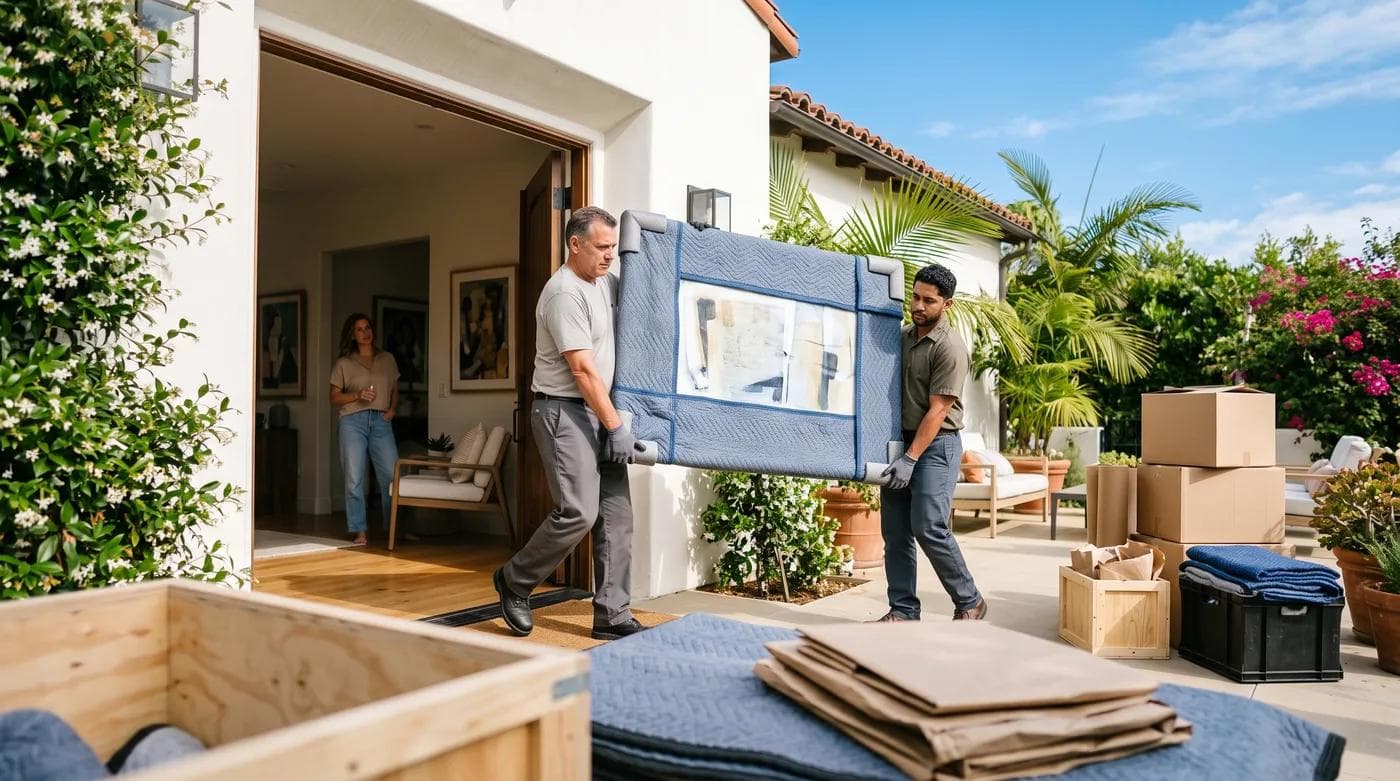
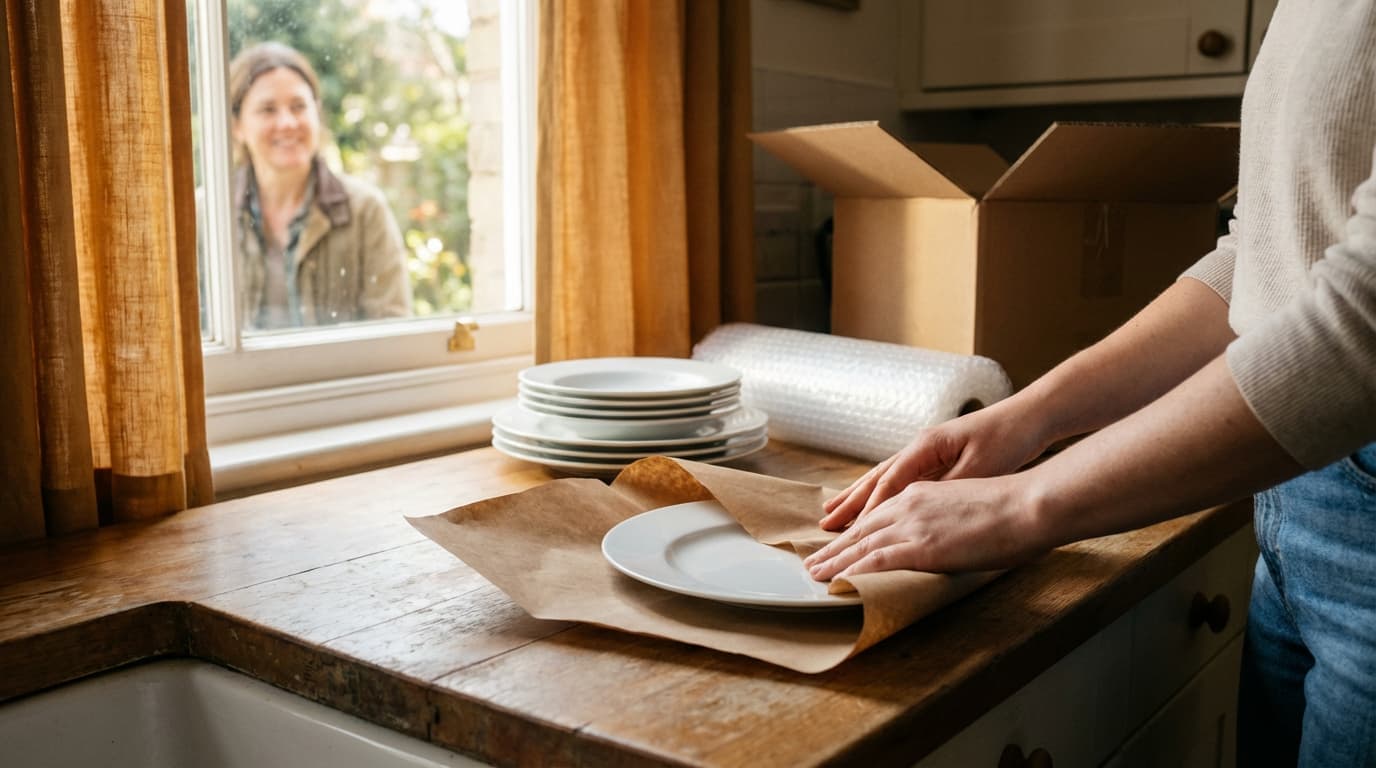
Dishes and glassware are the most fragile items in any move — and the ones people pack wrong most often. I've packed kitchens for over 500 moves across Los Angeles, and the pattern is always the same: people stack plates flat, wrap glasses with a single sheet of paper, and wonder why they open a box of shards at their new place.
Learning how to pack dishes for moving isn't complicated. It just requires the right technique, the right materials, and about 30 minutes of patience per box. This guide covers everything — plates, bowls, wine glasses, mugs, and the odd-shaped pieces that don't fit neatly anywhere. Whether you're handling a local move in Los Angeles or shipping your kitchen across the country, these methods will keep your dishes intact.
Supplies You Need Before You Start
Before you touch a single plate, gather everything. Stopping mid-pack to hunt for tape or paper wastes time and leads to shortcuts — and shortcuts break dishes.
Packing paper (unprinted newsprint) is the foundation. You'll use more than you think — plan on 5–8 pounds for a full kitchen. Regular newspaper works in a pinch, but the ink transfers onto dishes, especially white ceramics. Packing paper is clean and costs about $15–20 for a 25-pound bundle.
Bubble wrap is for your most fragile items: wine glasses, crystal, thin-walled ceramics. Don't use it on everything — packing paper alone handles plates and bowls fine. Save the bubble wrap for stemware and anything irreplaceable.
Medium-sized boxes (18" x 18" x 16" or similar). Dish boxes with cell dividers are ideal for glassware but not required. The most important rule: never use a box bigger than medium for dishes. Large boxes filled with dishes are too heavy to lift safely and the weight increases breakage risk.
Packing tape, a marker, and crumpled paper for cushioning the bottom and top of each box. That's the full list. No specialty tools needed.
Buy 20% more packing paper than you think you need. Running out mid-box leads to under-wrapping, which leads to breakage. Leftover paper costs a few dollars. A broken set of dishes costs much more.
How to Pack Plates Step by Step
Plates are the easiest kitchen item to pack correctly, but the most common to pack wrong. The mistake everyone makes: stacking plates flat in a box. A flat stack puts all the impact force on the bottom plate during transit. One bump and the whole stack cracks.
The right way: pack plates vertically, like records in a crate. Here's the process:
Start with a cushion layer. Crumple 3–4 sheets of packing paper and press them into the bottom of the box. You want about 2–3 inches of cushioning before any dish goes in.
Wrap each plate individually. Place the plate in the center of a packing paper sheet, fold the corners over one at a time, and tuck them against the face. For dinner plates, use two sheets. For smaller salad plates, one sheet is fine. The paper should fully cover every surface.
Stand plates on edge in the box, pressing them gently against each other with the wrapped surfaces touching. Fill gaps between plates with crumpled paper. Each plate should feel snug but not forced.
Once the box is full, add another 2–3 inches of crumpled paper on top. Close the box, shake it gently. If you hear shifting or rattling, open it and add more paper. When nothing moves, tape the box shut and write "FRAGILE — Plates — Kitchen" on two sides and the top.
Never use towels or clothing as cushioning for dishes. They compress under weight, leaving your plates unprotected after the first bump. Packing paper and crumpled paper hold their shape throughout the move.
How to Pack Glasses and Stemware
Glasses break because of their thin walls and the fact that people don't wrap them individually. Every single glass needs its own wrapping — no exceptions, even for sturdy pint glasses.
Standard Glasses (Tumblers, Pint Glasses, Mugs)
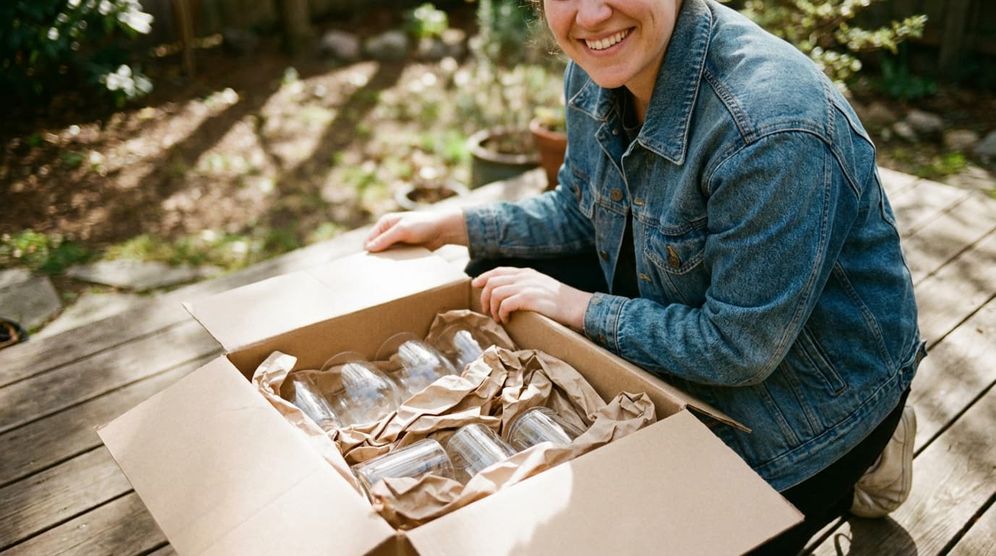
Stuff a small ball of crumpled paper inside the glass first. This absorbs impact from the inside. Then place the glass on a sheet of packing paper, roll it up, tuck the excess paper into the opening, and secure with a small piece of tape if needed.
Stand wrapped glasses upright in the box, opening facing up. Fill every gap between glasses with crumpled paper. The goal: nothing touches anything else directly, and nothing can shift when the box moves.
Wine Glasses and Stemware
Stems are the weak point. Wrap the stem and base separately with a strip of bubble wrap before wrapping the entire glass in packing paper. If you have cell dividers (the cardboard grids that fit inside boxes), use them — one glass per cell, stem pointing down. If you don't have dividers, wrap each glass in bubble wrap plus paper and stand them upright with extra crumpled paper between each one. For especially valuable stemware, a white glove service includes professional-grade packing for fragile items like crystal and antique glassware.
If you're packing in an LA apartment without AC during summer, be aware that tape adhesive weakens in heat. Double-tape the bottom of every dish box. I've seen boxes give out from the bottom during hot-weather moves because the tape softened in a truck sitting in direct sunlight.
How to Pack Bowls, Mugs, and Odd Shapes
Bowls nest naturally, which makes people think they can be stacked without wrapping. They can't. Unwrapped bowls chip at the rim where they contact each other. Wrap each bowl individually in one sheet of packing paper, then nest 3–4 wrapped bowls together and stand the stack vertically in the box.
Mugs get the same treatment as standard glasses: crumpled paper inside, full wrap outside, standing upright in the box. Don't hang mugs by their handles in the box — handles are the first thing to snap.
Odd shapes — gravy boats, serving platters, irregularly shaped ceramics — each get individually wrapped in packing paper with extra cushioning around any protruding parts (spouts, handles, lids). Lids should be wrapped separately from their bases and placed next to them, not on top.
Packing the Box: Layering and Filling Gaps
A properly packed dish box follows a simple structure: cushion layer on the bottom, heaviest items in first, lighter items on top, cushion layer on top, and zero empty space.
Heaviest items first: Plates and heavy bowls go on the bottom. Glasses and stemware go in the middle or on top. Never put a wine glass underneath a stack of dinner plates.
Fill every gap. Crumpled paper goes between items, around the sides of the box, and on top before closing. The test: when you close the box and press down on the top flaps, there should be zero give. If the top compresses, the contents can shift during the move.
Weight limit: A packed dish box should not exceed 40–50 pounds. If you can't comfortably lift it, it's too heavy. Split the contents into two boxes. Your movers will thank you, and your dishes will be safer.
When you scan your space with AI Moving, the AI captures your full kitchen inventory. This means when movers bid on your move, they know exactly how many dish boxes to plan for. That's smarter planning — check how our AI estimate works to see it in action.
Common Mistakes That Lead to Breakage
Using boxes that are too large. Big boxes filled with dishes become 70–80 pound deadweights that are hard to carry and easy to drop. Stick to medium or dish-specific boxes.
Skipping the bottom cushion. The bottom of the box hits the truck bed, the dolly, the floor of your new apartment. Without 2–3 inches of crumpled paper underneath, the first item in the box absorbs every impact.
Wrapping multiple items together. Two plates wrapped in the same sheet of paper will rub against each other and chip. One item, one wrap. Always.
Not labeling the box. If a box isn't marked FRAGILE, it gets treated like every other box. Write FRAGILE on at least two sides and the top. If movers don't know it's dishes, they'll stack heavy boxes on top of it.
Using damaged boxes. A box that's been used before has weakened corners and creases. For dishes, always use new or like-new boxes. This is especially important for a long-distance move where boxes spend hours in a truck.
AI Moving's video scan captures your kitchen inventory in minutes. Movers see exactly what's being packed — that means accurate quotes and the right supplies on moving day. No underestimating, no scramble for extra boxes.
Frequently Asked Questions
Q: Should I pack dishes vertically or flat?
Always vertically. Plates packed on their edge distribute impact force better than a flat stack. Think of it like a record crate — each plate stands up individually, cushioned by packing paper on both sides.
Q: Do I need to buy special dish boxes?
They help but aren't required. Cell dividers inside a box are great for glasses and stemware. For plates and bowls, a standard medium box with proper cushioning and individual wrapping works fine.
Q: How much packing paper do I need for a kitchen?
Plan on 5–8 pounds of packing paper for a full kitchen (25–40 pieces of dishware). A 25-pound bundle runs about $15–20 and covers most kitchens with paper to spare. Buy extra rather than risk running short.
Q: Can I use newspaper instead of packing paper?
It works, but the ink transfers onto dishes — especially white and light-colored ceramics. You'll need to wash everything at your new place. Unprinted packing paper is clean and only slightly more expensive.
Q: How much does professional packing cost for a kitchen?
In Los Angeles, professional packing for a kitchen typically runs $150–$300 depending on the size and number of items. Many movers on the AI Moving platform include basic packing materials in their quotes — check our pricing for current rates.
Pack Smart, Move Safe
Your kitchen is probably the most breakage-prone part of your move, but it doesn't have to be the most stressful. The right paper, the right technique, and a little patience go a long way. Wrap every item individually, pack plates vertically, cushion everything, and never overfill a box.
Ready to plan the rest of your move? Scan your space with AI Moving and get an accurate inventory in minutes. Vetted LA movers will send you quotes based on exactly what you're moving — including every plate, glass, and gravy boat in your kitchen.